Lamech F.: Self-Reporting of Symptom Development From Exposure to Radiofrequency Fields of Wireless Smart Meters in Victoria, Australia: A Case Series, Altern Ther Health Med. 2014 Nov-Dec;20(6):28-39. http://www.ncbi.nlm.nih.gov/pubmed/25478801 – The study examines 92 residents who reported symptoms to a website, and analyzes and discusses them. It finds that the symptoms most frequently reported to occur after the installation of smart meters were insomnia, headache, tinnitus, fatigue, cognitive impairment, dysesthesia, and brain fog.
Uncategorized
Dismissal of 5G vote by the AGO
THE COMMONWEALTH OF MASSACHUSETTS
OFFICE OF THE ATTORNEY GENERAL CENTRAL MASSACHUSETTS DIVISION 10 MECHANIC STREET, SUITE 01 WORCESTER, MA 01608
November 8, 2023
(508) 792-7600 (508) 795-1991 fax www.mass.gov/ago
Jennifer L. Messina, Town Clerk Town of Great Barrington 334 Main Street Great Barrington, MA 01230
Re: Great Barrington Annual Town Meeting of May 1, 2023 – Case# 10937 Warrant Articles# 30, 31, 32, 33, 34, 35, 36, and 38 (Zoning)
Warrant Articles# 24, 29, and 39 (General) 1
Dear Ms. Messina:
Article 38 – Under Article 38, a citizen’s petition article, the Town voted to add to the Town’s “Wireless Telecommunications Overlay District” a new Section 9.3.16.5 that declares all wireless telecommunications facilities (WTF) applications to be incomplete until the FCC completes an environmental review of existing WTF and updates its regulations based on the result of its review. As explained in more detail below, we disapprove Article 38 because it is a prohibition on wireless communications facilities in violation of the federal Telecommunications Act of 1996, 47 U.S.C. § 332 (c) (7) (TCA). See Town of Amherst, N.H. v. Omnipoint Communications Enters, Inc., 173 F.3d 9, 16 (1st Cir. 1999) (state and local laws are preempted, under the Supremacy Clause of the Federal Constitution if they are read and applied so as effectively to preclude personal wireless service).
We emphasize that our decision in no way implies any agreement or disagreement with the policy views that may have led to the passage of the by-law amendments. The Attorney General’s limited standard of review requires her to approve or disapprove by-laws based solely on their consistency with state law, not on any policy views she may have on the subject matter or wisdom of the by-law. Id. at 795-96, 798-99. During our review of Article 38, we received correspondence urging us to approve the by-law asserting that it protects the public from health and safety issues associated with WTF. We appreciate these communications as they have aided our review. However, we must disapprove Article 38 for the reasons explained below.
1 In a decision issued to the Town on August 1, 2023, we approved Articles 29, 30, 31, 32, 33, 34, 35, and 39; took no action on Article 24 because it was not a by-law amendment, and by agreement with Town Counsel under G.L. c. 40, § 32, we extended our deadline for a decision on Article 38 for an additional ninety days until November 8, 2023.
In this decision we describe the by-law amendments; discuss the Attorney General’s limited standard ofreview of town by-laws under G.L. c. 40, § 32; and then explain why, governed as we are by that standard, we disapprove Article 38.
I. Summary of Article 38
Under Article 38 the Town amended Section 9.3.16 to add a new paragraph 5 that deems all WTF applications incomplete until the FCC completes its review of WTF and updates its regulations to include measures that comply with the results of the FCC’s review as follows:
WTF applications, will be considered incomplete until the FCC completes the DC Circuit Court- mandated Environmental Review of the entire 800,000 to I million WTF roll out to the conditions as stated in the NEPA policy Act 1691 I including studies from scientists independent from industry, who have fully investigated millimeter wave 5G small cell technology safety; and that the FCC regulations have been updated to include measures that comply with the results of this review; and, that the Town of Great Barrington shall consider reasonable alternatives such as fiber optic.
1 The FCC is required by the National Environmental Policy Act of 1969, among other things, to evaluate the effect of emissions from FCC-regulated transmitters on the quality of the human environment. On August 9, 2019, the D.C. Circuit Court of Appeals, in its Ruling in Case 18-1129, vacated FCC Order l 8-30’s deregulation of small-cell Wireless Transmission Facilities(s) [sWTFs} and remanded this to the FCC. In Case 18-1 129, the judges stated that “the FCC failed to justify its determination that it is not in the public interest to require review of [sWTF] deployments” and ruled that “the Order’s deregulation of [sWTFs] is arbitrary and capricious.” The FCC was mandated to do this review in two court rulings which are submitted into the record: one in 2019 in Case 18-1129, Keetoowah et al. v FCC; and another in 2021 in Case 20-1025, EHT/CHD v. FCC. To date the FCC has not complied.
https://scientists4wiredtech.com/2019/08/federal-court-overturns-fee-overturns- fee-order- bypassingenvironmental-r https://www.fee.govIdocument/dc circuit-decision-environmental-helath- trust-v-fec
Definition: Wireless Telecommunications Facilities means the plant, equipment and property including, but not limited to, cables, wires, conduits, ducts, pedestals, electronics, and other appurtenances used or to be used to transmit, receive, distribute, provide or offer wireless telecommunications service. October I, 2019, the D.C. Circuit Court of Appeals in Case No, 18-1051, Mozilla et al. v. FCC, confirmed internet “Services” to be reclassified by the FCC as Title I, unregulated “Information Services”. At present, only wireline and wireless telephone and text transmissions are classified as Title II, regulated “Telecommunications Services”. Title I and Title II applications, therefor, need to be regulated differentially by local planning boards and commissions. Every new [wireless telecommunications
facility (“WTF”)] must undergo NEPA review, and that WTF applications cannot be batched for such purpose.
- Attorney General’s Standard of Review of Zoning By-laws
Our review of Article 38 is governed by G.L. c. 40, § 32. Under G.L. c. 40, § 32, the Attorney General has a “limited power of disapproval,” and “[i]t is fundamental that every presumption is to be made in favor of the validity of municipal by-laws.” Amherst, 398 Mass. at 795-96. The Attorney General does not review the policy arguments for or against the enactment. Id. at 798-99 (“Neither we nor the Attorney General may comment on the wisdom of the town’s by-law.”) “As a general proposition the cases dealing with the repugnancy or inconsistency of local regulations with State statutes have given considerable latitude to municipalities, requiring a sharp conflict between the local and State provisions before the local regulation has been held invalid.” Bloom v. Worcester, 363 Mass. 136, 154 (1973).”
Article 38, as an amendment to the Town’s zoning by-laws, must be accorded deference.
W.R. Grace & Co. v. Cambridge City Council, 56 Mass. App. Ct. 559, 566 (2002) (“With respect to the exercise of their powers under the Zoning Act, we accord municipalities deference as to their legislative choices and their exercise of discretion regarding zoning orders.”). When reviewing zoning by-laws for consistency with the Constitution or laws of the Commonwealth, the Attorney General’s standard of review is equivalent to that of a court. “[T]he proper focus of review of a zoning enactment is whether it violates State law or constitutional provisions, is arbitrary or unreasonable, or is substantially unrelated to the public health, safety or general welfare.” Durand v. IDC Bellingham, LLC, 440 Mass. 45, 57 (2003). However, a municipality has no power to adopt a zoning by-law that is “inconsistent with the constitution or laws enacted by the [Legislature].” Home Rule Amendment, Mass. Const. amend. art. 2, § 6.
- Article 38 Conflicts with the TCA’ Prohibition on Local Laws that Prohibit or Have the Effect of Prohibiting the Siting of Wireless Telecommunication Facilities
The federal Telecommunications Act of 1996, 47 U.S.C. § 332 (c) (7) (TCA) preserves state and municipal zoning authority to regulate personal wireless service facilities. However, the TCA imposes limitations on that authority as follows:
- Zoning regulations “shall not unreasonably discriminate among providers of functionally equivalent services.” 47 U.S.C. §332 (c) (7) (B) (i) (I)
- Zoning regulations “shall not prohibit or have the effect of prohibiting the provisions of personal wireless services.” 47 U.S.C. § 332 (c) (7) (B) (i) (II).
- The Zoning Authority “shall act on any request for authorization to place, construct, or modify personal wireless service facilities within a reasonable period of time.” 47 U.S.C. § 332 (c) (7) (B) (ii).
- Any decision “to deny a request to place, construct, or modify personal wireless service facilities shall be in writing and supported by substantial evidence contained in a written record.” 47 U.S.C. § 332 (c) (7) (B) (iii).
- “No state or local government or instrumentality thereof may regulate the placement, construction and modification of personal wireless service facilities on the basis of the environmental effects of radio frequency emissions to the extent that such facilities comply with the [Federal Communications] Commission’s regulations concerning emissions.” 47 U.S.C. § 332 (c) (7) (B) (iv).
While the TCA does not define what constitutes a “prohibition” or an “effective prohibition” of WTF, the Federal courts have construed the limitations listed under 47 U.S.C. § 332 (c) (7) as follows. First, even a facially neutral by-law may have the effect of prohibiting the provision of wireless coverage if its application suggests that no service provider is likely to obtain approval. “If the criteria or their administration effectively preclude towers no matter what the carrier does, they may amount to a ban ‘in effect’….”Town of Amherst, N.H. v. Omnipoint Communications Enters, Inc., 173 F.3d 9, 14 (1st Cir. 1999).
Second, local zoning decisions and by-laws that prevent the closing of significant gaps in wireless coverage have been found to effectively prohibit the provision of personal wireless services in violation of 47 U.S.C. § 332(7). See, e.g., Nat’l Tower, LLC v. Plainville Zoning Bd. of Appeals, 297 F.3d 14, 20 (1st Cir. 2002) (“local zoning decisions and ordinances that prevent the closing of significant gaps in the availability of wireless services violate the statute”); Omnipoint Communications MB Operations, LLC v. Town of Lincoln, 107 F. Supp. 2d 108, 117 (D. Mass. 2000) (by-law resulting in significant gaps in coverage within town had effect of prohibiting wireless services).
Third, whether the denial of a permit has the effect of prohibiting the provision of personal wireless services depends in part upon the availability of reasonable alternatives. See 360 Degrees Communications Co. v. Bd. of Supervisors, 211 F.3d 79, 85 (4th Cir. 2000). Zoning regulations must allow cellular towers to exist somewhere. Towns may not effectively ban towers throughout the municipality, even under the application of objective criteria. See Virginia Metronet, Inc. v. Bd. of Supervisors, 984 F. Supp. 966,971 (E.D. Va. 1998).
In addition, 47 U.S.C. § 253, “Removals of Barriers to Entry” provides that “[n]o State or local statute or regulation, or other State or local legal requirement, may prohibit or have the effect of prohibiting the ability of any entity to provide any interstate or intrastate telecommunications service.” Section 253 (a); see ExteNet Systems, Inc. v. City of Cambridge, Ma, 481 F.Supp 3d 41, 58 (D. Mass. 2020) (“Because the [city’s] Small Call Wireless Policy is not an outright ban on the provision of personal wireless service, the validity of the Policy hinges on ‘whether the [Policy] effectively prohibits the provision of wireless services”‘).
Further, Section 6409 of the Middle-Class Tax Relief and Job Creation Act of 2012 requires that “[A] state or local government may not deny, and shall approve, any eligible facilities request for a modification of an existing wireless tower or base station that does not substantially change the physical dimensions of such tower or base station.” (emphasis added). The Act defines “eligible facilities request” as any request for modification of an existing wireless tower or base station that involves: (1) collocation of new transmission equipment; (2) removal of transmission equipment; or (3) replacement of transmission equipment. The Act applies “[n]otwithstanding
section 704 of the Telecommunications Act of 1996.” The Act’s requirement that a local government “may not deny, and shall approve, any eligible facilities request” means that a request for modification to an existing facility that does not substantially change the physical dimensions of the tower or base station must be approved.
In addition, on September 26, 2018, the FCC adopted FCC 18-133 (“Ruling and Order”), regarding the authority of municipalities to regulate small wireless facilities. Among other things, the Ruling and Order: (1) clarifies when a local requirement constitutes an effective prohibition on small wireless facilities; [Section III.A]; (2) establishes the standards and limits for fees and charges applicable to small wireless facilities; [Section 111.B]; and (3) establishes the timeframes within which a municipality must act upon small wireless facility provider’s applications [Section IV.A].
In City of Portland et al vs. United States of America, 969 F. 3d 1020 (9th Cir. 2020), the court upheld most of the FCC’s Ruling and Order. The court upheld the FCC’s fee limitations, the time periods in which local governments must act on applications, and the FCC’s authority under the Telecommunications Acts of 1996 to remove barriers that would have prevented a wireless service provider from accessing existing utility poles. Id. at 1039, 1043-1046. In addition, the court upheld the requirement that aesthetic regulations be reasonable but overturned the FCC’s requirements that aesthetic regulations be objective and no more burdensome than those applied to other types of infrastructure. Id. at 1042-1043.
The new Section 9.3.16.5 deems an application incomplete until the FCC engages in a review of WTF and amends its regulations based on the information obtained during its review. Because all applications for a WTF in Great Barrington are deemed “incomplete” until the FCC conducts this review, the permit granting authority cannot issue a permit for a WTF in the Town. Put simply, an applicant could fully comply with the Town’s by-laws but will still be denied a permit because the FCC has not reviewed WTFs and amended its regulations. Section 9.3.16.5 thus establishes a condition that no WTF applicant can satisfy. This condition results in a prohibition on WTF in violation of the TCA. See Town of Amherst, N.H. v. Omnipoint Communications Enterprises, Inc., 173 F.3d 9, 14 (1st Cir. 1999) (where town’s criteria for granting WTF permit effectively precludes WTF no matter what applicant does there is an effective ban on WTF in violation ofTCA); National Tower, LLC, v. Plainville Zoning Bd. of Appeals, 297 F.3d 14, 23 (1st Cir 2002) (“Setting out criteria under the zoning law that no one could ever meet is an example of an effective prohibition… The Telecommunications Act preempts such by-law strictures.”). For this reason, the new Section 9.3.16.5 runs afoul of the TCA’s provisions against local laws that prohibit WTF, and we disapprove it. 2
2 The petitioners cite to two case to attempt to support the legality of Article 38: United Keetowah Band of Cherokee Indians in Oklahoma v. Federal Communications Commission, 933 F.3d 728 (D.C. Cir. 2019) and Environmental Health Trust, et al. v. Federal Communications Commission, 9 F.4th 893 (D.C. Cir. 2021). However, the petitioners misconstrue these cases because neither case authorizes a town to withhold or deny a WTF while the FCC engages in a study and updates its regulations based on a future study.
IV. Conclusion
Because Article 38 results in a complete prohibition of WTF in the Town, it conflicts with the TCA and must be disapproved.
Note: Pursuant to G.L. c. 40, § 32, neither general nor zoning by-laws take effect unless the Town has first satisfied the posting/publishing requirements of that statute. Once this statutory duty is fulfilled, (1) general by-laws and amendments take effect on the date these posting and publishing requirements are satisfied unless a later effective date is prescribed in the by-law, and (2) zoning by-laws and amendments are deemed to have taken effect from the date they were approved by the Town Meeting, unless a later effective date is prescribed in the by-law.
Very truly yours,
ANDREA JOY CAMPBELL ATTORNEY GENERAL
By: Kelli E. Gunagan Assistant Attorney General Municipal Law Unit
10 Mechanic Street, Suite 301 Worcester, MA 01608 (508) 792-7600
cc: Town Counsel David J. Doneski
AG reply to Sheffield/Gt. Barrington 5G bylaw
Australia study on effects before/after smart meters
Symptoms after Exposure to Smart Meter Radiation
read the full article
People from coast to coast in the USA, and from one side of the world to the other, are becoming ill after exposure to the radiofrequency radiation emitted by Wireless Smart Meters. Attached are the results of two surveys of the symptoms being reported.
The first survey comes from the United States and includes 318 adults, from 28 states from California to New York, and addresses wireless utility meters that are principally Wireless Smart Meters. The second survey comes from the other side of the world, Victoria, Australia, and includes 92 adults and children, and addresses Wireless Smart Meters exclusively. Altogether, 410 adults and children are included. Both surveys report new or worsened symptoms after the installation of wireless utility meters in a given individual’s environment. The attached two graphs show the percentage of individuals in each survey who experienced each symptom. The two surveys group the symptoms into somewhat different clusters, but these clusters are similar enough to enable comparison between the surveys. Of the top seven clusters of symptoms in both surveys, six clusters are similar in both description and order of occurrence: (1) sleep disruption; (2) headaches; (3) ringing or buzzing in the ears; (4) fatigue; (5) loss of concentration, memory, and learning ability; and (6) disorientation, dizziness, and loss of balance. Most individuals in the surveys developed multiple symptoms. The surveys do not tell us how likely a given individual is to become symptomatic after exposure to the radiation from Wireless Smart Meters. But the surveys do tell us which
symptoms a person who does become symptomatic is most likely to experience. The many symptoms found reflect the many body systems that are disrupted by such radiation. A symptom, of course, is something that can be sensed by an individual, and thus can serve as a warning. Unfortunately, many health effects caused by radiofrequency radiation have no early symptoms and thus give no warning. These health effects become evident only after significant harm has been done. Examples are DNA damage, cancer, and reproduction effects.
5G attacks farms
Farms in jeopardy… read this and if you want to help call the gov’t 202-225-3121 and leave the message we do not want to support HR 1339, HR 4351, HR 5082, HR 61421/s, HR 2542, HR 197/s.734 These are all bills that if passed will have negative effects on our farmers!!

Comprehensive site on wifi hazard news
Tom Valovic | Author | Common Dreams
Tom Valovic is a journalist and the author of Digital Mythologies (Rutgers University Press), a series of essays that explored emerging social and political issues raised by the advent of the Internet. He has served as a consultant to the former Congressional Office of Technology Assessment. Tom has written about the effects of technology on society for a variety of publications including Columbia University’s Media Studies Journal, the Boston Globe, and the San Francisco Examiner, among others.
Opinion | Big Tech Companies Are Becoming More Powerful Than Nation-States | Common Dreams
Pittsfield cell tower under siege
A group of Pittsfield, Massachusetts, residents said they feel “vindicated” after a superior court judge earlier this month ruled their lawsuit alleging a Verizon cell tower made them sick can move forward
4/30/23 5G and diabetes
https://www.sciencedirect.com/science/article/abs/pii/S0891061822000989
The use of 5 G with other currently used generations of technology standards with different frequencies will lead to accumulative effects (Tan et al., 2017). Cumulative biological effects are strongly related to the intensity and duration of radiofrequency exposure. The current exposure limits are based on adverse health outcomes due to temperature rise (tissue warming and inducible tissue stimulation from short-term or acute exposures) (Belpomme et al., 2018). The present study was designed to determine the effects of exposure to 3.5 GHz RFR (GSM, 217 Hz modulation frequency, pulse width 577 μs) emitted from 5 G technologies on total antioxidant (TAS), total oxidant (TOS), hydrogen peroxide (H2O2), nesfatin, ghrelin, and irisin levels in the brains of healthy and diabetic rats and possible histological changes.
click link to read the entire study:
https://www.sciencedirect.com/science/article/abs/pii/S0891061822000989
4/26/23 5G towers NYC need historic review
| City’s Proposed 5G Towers Will Have to Undergo Additional Historic Review |
 |
| We have recently been notified that the city’s proposed three-story 5G transmission towers will have to undergo Section 106 review, a federal-level review designed to prevent negative impacts upon historic resources. This is good news for our neighborhoods as we work to prevent these oversized and in many cases unnecessary towers from being located in our midst — read the letter from the Federal Communications Commission to CityBridge, the firm installing the towers. Installation is not supposed to proceed until that review process has been completed. This action comes after inquiries from Congressman Jerrold Nadler. Thanks also go to our friends at Save Gansevoort and the Carnegie Hill Neighbors for their work on this. Any tower proposed for a historic district or landmarked site will still have to go through the city’s public review process via the Landmarks Preservation Commission. However, we don’t yet know what that process will look like or how the appropriateness of the proposed siting will be evaluated. The city’s rollout of this program has been haphazard and inconsistent, and involves contradictory statements about where towers would go and why. We continue to push back on the need for and appropriateness of many of the proposed installations. |
4/12/23: Are we fighting an uphill battle?
Biden administration’s April 12 launch of a $1.5 billion telecommunications “innovation fund” to “help to ensure that the future of 5G and next-gen wireless technology is built by the U.S. and its global allies and partners.” We need to continue to expose 5G hazards and contact our legislators to question this policy.
Cell phones and Dental Implants
How do EMF’s affect dental health, and should we be concerned? In my experience the answer is yes. If you have titanium dental implants, cell phones placed up to your ear on the side of the implant has been shown to raise the temperature of the implant. Even a couple of degrees can make a difference, as anyone who’s ever had a fever can attest to. What happens with a temperature increase is that cytokine proteins signal immune cells to the area, causing inflammation. Inflammation begins a cascade of events that could lead to gum disease around a metal implant, also known as peri-implantitis. Zirconia implants don’t have this issue as they don’t conduct heat nearly as much.
The second reason you should be concerned is if you have bleeding gums or gum disease. Bacteria have been shown to reproduce up to 6 times faster when exposed to electrical fields. This can accelerate the advancement of gum disease, in my opinion. In cases where I have seen extreme bacterial activity, I ask the patient if they use cell phones often, and whether they use the phone right next to their head. The answer to both questions is usually ‘Yes’.
https://myholisticdentist.com/2019/08/20/emfs-and-dental-health-should-i-be-concerned/
5G Feb. 10 2023 Berkshire Eagle Comment
Another month, another Berkshire community facing debate about the siting and safety of cell towers.
Now that the controversy has been transmitted to Great Barrington, our reaction is the same as when similar conflicts cropped up in Pittsfield, Lenox and Sheffield: We need better data and an updated regulatory structure for municipal officials to lean on when confronting these debates about wireless communications facilities.
With the Great Barrington town clerk’s certification of a residential petition, it looks like annual town meeting voters will decide whether to ban fifth-generation (or “5G”) cellular telephone technology until the government reviews radiofrequency emissions safety standards. Unfortunately, Great Barrington can expect a similarly heated run-up to that May 1 meeting as we saw in Lenox ahead of that town’s vote on a wireless facilities bylaw.
That proposed bylaw fell amid a vociferous campaign opposing new cell towers based on claims that the structures pose imminent health threats to surrounding populations. This underscores the bind local officials find themselves in while navigating a pressing infrastructure issue. Municipal officials, from the Pittsfield Board of Health to the Lenox Planning Board, are pressed by a vocal contingency of constituents who claim 5G technology and other wireless communication facilities pose myriad health threats, from headaches and tinnitus to nausea and cancer.
Even if local officials are completely convinced of these claims, they are between a rock and a hard place as wireless demand increases. Residents and businesses want better service; schoolchildren and homebound folks need high-speed connections need better wireless; first responders worry about the ability to field emergency calls even from some busy areas like downtown Lenox. Meanwhile, municipal officials don’t have much procedural wiggle room anyway, as local governments seeking to restrict the number or placement of cell towers are limited by federal telecommunications law.
We are skeptical of the more far-reaching health claims from the most strident cell tower opponents. The most-vocal minority often exaggerates the conclusions and certainty of clinical research on radiofrequency emissions while downplaying other biases nearby homeowners often hold against cell towers like impact on their property’s view or valuation.
Still, as we’ve noted, some cell tower opponents have a point: As wireless technologies’ capabilities and presence have expanded, the regulatory framework around them has not. Agencies like the Federal Communications Commission and telecom giants like Verizon point to operational rules developed in the previous millennium before mobile devices and wireless infrastructure were as ubiquitous and advanced as they now are.
That must change, and our state and federal leaders should see the need for that update as their municipal counterparts continue to trip over these wires.
Legislation previously filed on Beacon Hill could kickstart this necessary exploratory mission. In the last two sessions, bills that would establish a state 5G technology task force have languished, but they’re just what the situation demands. The most recent version of the bill would create a blue-ribbon committee bringing together lawmakers, regulators, state tech officials and business representatives to review the current state of wireless communications regulation and recommend relevant updates for the 5G era.
While the last two bills were sent to die in a study order, we hope state lawmakers — especially Berkshire delegates seeing more of their communities entrenched in these debates — see the benefit of pursuing such legislation in this new session. In addition to lawmakers, business figures and tech experts, it should involve health experts as well, since medical concerns fuel the tower tiffs for many towns.
Forming a state committee might not be the bold action some seek. But our communities require hard data — not just the talking points of the telecom industry and anti-tower advocates — that civilians and officials alike can turn to as these debates inevitably intensify. We have to start somewhere, and a meaningful state effort could build momentum for a more robust look at the federal level as well. Whatever information gleaned will be unlikely to move those dug in deep on either side, but we desperately need some broader and better-informed concensus on a topic where we have little to none.
This matter is complex as it is pressing. We aren’t experts on the intersection of public health and wireless technology. Neither are most town meeting voters in Lenox or Great Barrington. We have lawmakers and regulators for good reason, part of which is to avoid crafting policy on complex technological and infrastructure matters via simple referendum with no weight given to expertise. Now, though, the government must do the job it’s uniquely equipped to perform and objectively seek answers to public health questions popping up in town halls and public meetings across the region. Only then will we be well-positioned for a long overdue software update to the rules and regulations around cell towers. They are all that municipal officials have to rely on, and the multiplying local debates over 5G show they’re outdated and insufficient.
Beacon Hill won’t have time to diffuse that debate before it pressurizes Great Barrington’s town meeting warrant in May, but legislators should act swiftly to address the safety concerns and procedural headaches spreading through Massachusetts communities.
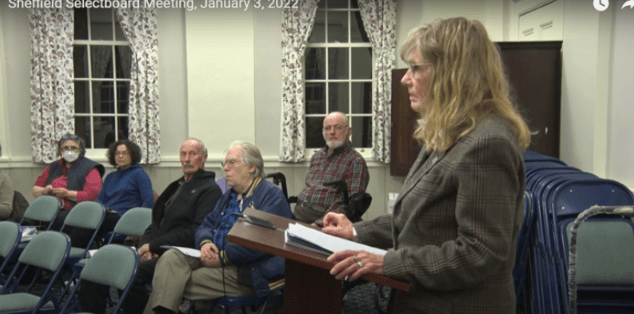
2023: Sheffield MA petition on 5G goes to a vote
47 voters signed the petition in Sheffield MA to set application requirements for 5G installations. It was accepted and now is a warrant for a vote at the annual town meeting in May.
Petition:
(Citizen’s Petition) For the reasons set forth above and notwithstanding any other provision of the Town of Sheffield General By-Laws to the contrary, To see if the Town will vote under the General Bylaws Chapter 216: Wireless Regulations, to adopt a Wireless Telecommunications Facilities (WTFs) application requirement for completeness: WTF applications, will be considered incomplete until the FCC completes the DC Circuit court-mandated Environmental Review of the entire 800,000 to 1 million WTF roll out to the conditions as stated in the NEPA Policy Act 19691 including studies from scientists independent from industry, who have fully investigated millimeter wave 5G small cell technology safety; and that the FCC regulations have been updated to include measures that comply with the results of this review; and, that the Town of Sheffield shall consider reasonable alternatives such as fiber optic.
1 The FCC is required by the National Environmental Policy Act of 1969, among other things, to evaluate the effect of emissions from FCC-regulated transmitters on the quality of the human environment. On August 9, 2019, the D.C. Circuit Court of Appeals, in its Ruling in Case 18-1129, vacated FCC Order 18-30‘s deregulation of small-cell Wireless Transmission Facilitie(s) [sWTFs] and remanded this to the FCC. In Case 18-1129, the judges stated that “the FCC failed to justify its determination that it is not in the public interest to require review of [sWTF] deployments” and ruled that “the Order’s deregulation of [sWTFs] is arbitrary and capricious.” The FCC was mandated to do this review in two court rulings which are submitted into the record: one in 2019 in Case 18-1129, Keetoowah et al. v FCC; and another in 2021 in Case 20-1025, EHT/CHD v FCC. To date the FCC has not complied.
https://www.fcc.gov/document/dc-circuit-decision-environmental-health-trust-v-fcc
Definition: Wireless Telecommunications Facilities means the plant, equipment and property including, but not limited to, cables, wires, conduits, ducts, pedestals, electronics, and other appurtenances used or to be used to transmit, receive, distribute, provide or offer wireless telecommunications service. October 1, 2019, the D.C. Circuit Court of Appeals in Case No, 18-1051, Mozilla et al. v. FCC, confirmed internet “Services” to be reclassified by the FCC as Title I, unregulated “Information Services”. At present, only wireline and wireless telephone and text transmissions are classified as Title II, regulated “Telecommunications Services”. Title I and Title II applications, therefore, need to be regulated differentially by local planning boards and commissions. Every new [wireless telecommunications facility (“WTF”)] must undergo NEPA review, and that WTF applications cannot be batched for such purpose.
Jan 2023 Canton MA success on cell tower siting
Gratitude from Safiyya and Bill
in Canton, MA
WE WON, 2-1! The Canton Zoning Board of Appeals denied the request for a Variance and Special Permit to construct a 125 foot monopole in our neighborhood, 400 feet from our homes. We now wait to see if Vertex Towers Assets, LLC chooses to litigate further and then it’s in the hands of the courts.
FCC mandated to investigate 5G harm
In Berkshire County, MA: First Pittsfield, then Lenox and now Sheffield. Heated debates over the lack of safety of Wireless Telecommunications Facilities (WTFs) of any size or any “G” are igniting in communities across the Berkshires. The so-called “5th-generation” of WTFs (i.e. 4G/5G densification) is stalling in many places because this ill-advised push into communities, attempting to place heavy industrial equipment into residential zones is running into stiff opposition.
Local residents are informed, organized and asserting their political will. They are insisting on responsible placement of WTFS: only in commercial and industrial zones and only if there is a proven gap in telecommunications service, which is judged as the inability to make outdoor wireless phone calls along major roadways.
The big problem for the Wireless industry is that on Friday the 13th in August 2021, the wireless world irrevocably changed due to a landmark ruling in the US Courts of Appeals, DC Circuit in Case 20-1025 Environmental Health Trust v. FCC, 9 F.4th 893 (D.C. Cir. 2021). In that ruling the DC Cir. judges based their ruling on the following substantial written evidence: 11,000+ pages of peer-reviewed, scientific evidence that Environmental Health Trust and Children’s Health Defense and others plaintiffs placed in the FCC’s public record: Vol-1, Vol-2, Vol-3, Vol-4, Vol-5, Vol-6, Vol-7 Vol-8, Vol-9, Vol-10, Vol-11, Vol-12, Vol-13, Vol-14, Vol-15, Vol-16, Vol-17, Vol-18, Vol-19, Vol-20, Vol-21, Vol-22, Vol-23, Vol-24, Vol-25, Vol-26 and Vol-27.
The judges in that case ruled:
“. . . we grant the petitions in part and remand to the Commission to provide a reasoned explanation for its determination that its [microwave radiation maximum public exposure] guidelines adequately protect against harmful effects of exposure to radio-frequency [microwave] radiation. It must, in particular,
- (i) provide a reasoned explanation for its decision to retain its testing procedures for determining whether cell phones and other portable electronic devices comply with its guidelines,
- (ii) address the impacts of RF radiation on children, the health implications of long-term exposure to RF radiation, the ubiquity of wireless devices, and other technological developments that have occurred since the Commission last updated its guidelines, and
- (iii) address the impacts of RF radiation on the environment.”
This ruling extinguishes the old tale spun by wireless industry propaganda that often fills mainstream media: that there is a debate about the safety of wireless infrastructure. That debate is over. The evidence of biological harms caused by the microwave radiation pollution that spews from WTF infrastructure antennas 24/7 has been
- Entered into the FCC’s public record,
- Accepted by the U.S. Court of Appeals, D.C. Circuit
- Ruled upon by the D.C. Circuit and all Circuits are bound by this ruling.
The judges mandated that the FCC finally address the substantial written evidence of negative impacts of pulsed, modulated wireless radiation from cellular infrastructure antennas on adults, children and the environment. The judges also mandated that the FCC determine whether its exposure guidelines adequately protect against harmful effects of exposure to radio-frequency microwave radiation. Therefore, no community should allow irresponsible placement of WTFs.
That is the evidence fueling the citizen action we’ve seen recently at the Pittsfield Board of Health and Lenox Planning Board. Now Sheffield officials are learning that the wireless industry propaganda holds no water.
Please note that any person or media outlet that claims that there “is a dearth of comprehensive scientific evidence on the long-term health impacts of exposure to microwave transmissions” is wrong and woefully uninformed. The links to the 11,000+ pages of evidence, inform everyone.
Similarly, any person or media outlet that alleges there is “little procedural wiggle room:” is also uninformed about the legislative intent of the 1996 Telecommunications Act, expressed in the 1996-TCA conference report cited by the U.S. Supreme Court in 2005 in City of Rancho Palos Verdes v. Abrams, 101 Cal.App.4th 367, 124 Cal. Rptr. 2d 80 (Cal. Ct. App. 2002)
Justice Breyer, with whom Justice O’Connor, Justice Souter and Justice Ginsburg join, concurring
“Congress initially considered a single national solution, namely a FCC wireless tower siting policy that would preempt state and local authority. Ibid.; see also H. R. Conf. Rep. No. 104-458, p. 207 (1996). But Congress ultimately rejected the national approach and substituted a system based on cooperative federalism. Id., at 207-208. State and local authorities remain free to make siting decisions.
The Legislative intent of the 1996-TCA is stated clearly in the 1996-TCA Conference Report:
“The conferees also intend that the phrase ‘unreasonably discriminate among providers of functionally equivalent services’ will provide localities with the flexibility to treat facilities that create different visual, aesthetic, or safety concerns differently to the extent permitted under generally applicable zoning requirements even if those facilities provide functionally equivalent services. For example, the conferees do not intend that if a State or local government grants a permit in a commercial district, it must also grant a permit for a competitor’s 50-foot tower in a residential district.”
In 1996, via cooperative federalism. localities were granted the power to locally regulate the operations of Wireless Telecommunications Facilities (WTFs) of any size or any “G” in order to ensure public safety. Sheffield’s cell tower controversy, like the ones before it and those that will inevitably follow, underscore that localities are not sufficiently informed about cooperative federalism and are overly-influenced by Wireless industry propaganda.
Any person or media outlet that alleges there is “a need for state and federal officials to give a helping hand to municipal panels”. or that there is a need for “a more robust and thoroughly updated regulatory framework that town planners and health boards can rely on when wireless facility opponents press their public safety case in town meetings and tower permit hearings” is reading straight from the Wireless industry propaganda playbook. There are no such needs. The Federal law, the 1996-TCA is clear: localities have the final say in zoning matters to restrict WTF placement in order to deliver actual safety to its residents.
Although, the Berkshire Eagle has expressed its “skepticism about far-reaching claims of myriad health problems caused by the [RF microwave] emissions from cell towers and that such claims should “require evidence demonstrating not just correlational but causal links.” . . . nothing in the 1996-TCA requires such causal links. That is just more Wireless industry propaganda.
The 1996-TCA says in Title 47 U.S. Code §332(c)(7)(B) (iii)
“Any decision by a State or local government or instrumentality thereof to deny a request to place, construct, or modify personal wireless service facilities shall be in writing and supported by substantial evidence contained in a written record.
The “substantial evidence contained in a written record” are the links to the 11,000+ pages of evidence, cited in the links, above. Any locality can cite that evidence to substantiate its decision to deny any irresponsible placement of a WTF in its community.
Berkshire Eagle Article on Sheffield MA 5G moratorium
Sheffield wants to ban 5G wireless until health questions are resolved. Will the town be able to stop it? READ THE FULL ARTICLE
Sheffield residents and activists have filed a petition with the town for a moratorium on 5G wireless installations until the higher radio frequencies they emit are proven safe. But outsmarting federal telecommunications law could prove difficult. It wrests control from local governments where matters of health and the environment are concerned.
THE ASSOCIATED PRESS
Lenox residents prevail.
Dear All,
My deepest gratitude to everyone who worked so tirelessly on educating those in Lenox about the unprotective, incomplete and full of holes bylaw that was not in the best interest of the town or the residents. Thank you to all who worked on and participated in the Safer Siting forum, who wrote letters for the record to the town, and who shared much better versions of the bylaw which allowed necessary facilities to be placed where they belonged. In this last busy holiday month, everyone has been amazing and efforts in this last week and last night were phenonenomal.
Sadly, the town choose to use an industry consultant who dished out medical, scientific, engineering and legal advice despite not being a doctor, scientist, engineer, or lawyer. While the town didn’t listen to our suggestions to hire- or simply talk to an non industry attorney who does this work- THE PEOPLE DID. Our voices, even though most of us were silenced when they cut open comments off early to “call the question” have been heard loud and clear.
Thank you to each of you for your unbelievable support, incredible efforts and strength in ensuring new towers are sited appropriately and not 30 feet from bedroom windows and 150 feet from front doors. We will continue to try to work with town leaders to get a new, appropriate ordinance passed.
The people have voted. They voted for health and safety.
Eagle Article below-
With gratitude,
Courtney
LENOX — Cheers erupted in Lenox Thursday night, as if the Red Sox won the World Series.
But it was opponents of the Planning Board’s proposed wireless telecommunications bylaw, victorious in their effort to defeat the plan.
The high-stakes special town meeting adjourned far earlier than expected. Resident Judy Moss called the question on the bylaw, asking voters to cut off debate after less than 30 minutes of discussion on the hotly contested wireless plan crafted by town planners over nearly two years and over 150 hours of Town Hall meetings.
A proposed bylaw regulating wireless facilities in Lenox has prompted vigorous opposition. Will these concessions win enough votes?
Views on wireless bylaw
A wireless bylaw to improve cell reception? Debate intensifies in Lenox as opponents urge caution
Sue Merritt, owner of Lenox Fit on Pittsfield Road, where the town’s major cell tower is located, spoke in support of the bylaw. “So far, I’m not glowing and I’m still here to talk about it. A lot of misinformation has been spread through the community.”
But Amelia Gilardi, teenage daughter of bylaw opponent Courtney Gilardi, described how she was “forced out” of her family home in southeast Pittsfield because of illness from a new Verizon Wireless cell tower, the subject of prolonged litigation by aggrieved residents.
She came to Lenox as a “safe haven” and stated that she didn’t vomit, get dizzy or miss school because of headaches, as she did in Pittsfield, but still suffers health impacts. “I lost the last three years of my childhood to this,” she told residents, asking for a “no” vote on the bylaw.
—————-
Courtney Gilardi
413 418 6925
Scientific American blog questions safety of 5G
Scientific American blog:
We Have No Reason to Believe 5G Is Safe
The technology is coming, but contrary to what some people say, there could be health risks
By Joel M. Moskowitz on October 17, 2019
We Have No Reason to Believe 5G Is Safe – Scientific American Blog Network
The telecommunications industry and their experts have accused many scientists who have researched the effects of cell phone radiation of “fear mongering” over the advent of wireless technology’s 5G. Since much of our research is publicly-funded, we believe it is our ethical responsibility to inform the public about what the peer-reviewed scientific literature tells us about the health risks from wireless radiation.
The chairman of the Federal Communications Commission (FCC) recently announced through a press release that the commission will soon reaffirm the radio frequency radiation (RFR) exposure limits that the FCC adopted in the late 1990s. These limits are based upon a behavioral change in rats exposed to microwave radiation and were designed to protect us from short-term heating risks due to RFR exposure.
Yet, since the FCC adopted these limits based largely on research from the 1980s, the preponderance of peer-reviewed research, more than 500 studies, have found harmful biologic or health effects from exposure to RFR at intensities too low to cause significant heating.
Citing this large body of research, more than 240 scientists who have published peer-reviewed research on the biologic and health effects of nonionizing electromagnetic fields (EMF) signed the International EMF Scientist Appeal, which calls for stronger exposure limits. The appeal makes the following assertions:
“Numerous recent scientific publications have shown that EMF affects living organisms at levels well below most international and national guidelines. Effects include increased cancer risk, cellular stress, increase in harmful free radicals, genetic damages, structural and functional changes of the reproductive system, learning and memory deficits, neurological disorders, and negative impacts on general well-being in humans. Damage goes well beyond the human race, as there is growing evidence of harmful effects to both plant and animal life.”
The scientists who signed this appeal arguably constitute the majority of experts on the effects of nonionizing radiation. They have published more than 2,000 papers and letters on EMF in professional journals.
The FCC’s RFR exposure limits regulate the intensity of exposure, taking into account the frequency of the carrier waves, but ignore the signaling properties of the RFR. Along with the patterning and duration of exposures, certain characteristics of the signal (e.g., pulsing, polarization) increase the biologic and health impacts of the exposure. New exposure limits are needed which account for these differential effects. Moreover, these limits should be based on a biological effect, not a change in a laboratory rat’s behavior.
The World Health Organization’s International Agency for Research on Cancer (IARC) classified RFR as “possibly carcinogenic to humans” in 2011. Last year, a $30 million study conducted by the U.S. National Toxicology Program (NTP) found “clear evidence” that two years of exposure to cell phone RFR increased cancer in male rats and damaged DNA in rats and mice of both sexes. The Ramazzini Institute in Italy replicated the key finding of the NTP using a different carrier frequency and much weaker exposure to cell phone radiation over the life of the rats.
ADVERTISEMENT
Based upon the research published since 2011, including human and animal studies and mechanistic data, the IARC has recently prioritized RFR to be reviewed again in the next five years. Since many EMF scientists believe we now have sufficient evidence to consider RFR as either a probable or known human carcinogen, the IARC will likely upgrade the carcinogenic potential of RFR in the near future.
Nonetheless, without conducting a formal risk assessment or a systematic review of the research on RFR health effects, the FDA recently reaffirmed the FCC’s 1996 exposure limits in a letter to the FCC, stating that the agency had “concluded that no changes to the current standards are warranted at this time,” and that “NTP’s experimental findings should not be applied to human cell phone usage.” The letter stated that “the available scientific evidence to date does not support adverse health effects in humans due to exposures at or under the current limits.”
The latest cellular technology, 5G, will employ millimeter waves for the first time in addition to microwaves that have been in use for older cellular technologies, 2G through 4G. Given limited reach, 5G will require cell antennas every 100 to 200 meters, exposing many people to millimeter wave radiation. 5G also employs new technologies (e.g., active antennas capable of beam-forming; phased arrays; massive multiple inputs and outputs, known as massive MIMO) which pose unique challenges for measuring exposures.
Millimeter waves are mostly absorbed within a few millimeters of human skin and in the surface layers of the cornea. Short-term exposure can have adverse physiological effects in the peripheral nervous system, the immune system and the cardiovascular system. The research suggests that long-term exposure may pose health risks to the skin (e.g., melanoma), the eyes (e.g., ocular melanoma) and the testes (e.g., sterility).
Since 5G is a new technology, there is no research on health effects, so we are “flying blind” to quote a U.S. senator. However, we have considerable evidence about the harmful effects of 2G and 3G. Little is known the effects of exposure to 4G, a 10-year-old technology, because governments have been remiss in funding this research. Meanwhile, we are seeing increases in certain types of head and neck tumors in tumor registries, which may be at least partially attributable to the proliferation of cell phone radiation. These increases are consistent with results from case-control studies of tumor risk in heavy cell phone users.
5G will not replace 4G; it will accompany 4G for the near future and possibly over the long term. If there are synergistic effects from simultaneous exposures to multiple types of RFR, our overall risk of harm from RFR may increase substantially. Cancer is not the only risk as there is considerable evidence that RFR causes neurological disorders and reproductive harm, likely due to oxidative stress.
As a society, should we invest hundreds of billions of dollars deploying 5G, a cellular technology that requires the installation of 800,000 or more new cell antenna sites in the U.S. close to where we live, work and play?
Instead, we should support the recommendations of the 250 scientists and medical doctors who signed the 5G Appeal that calls for an immediate moratorium on the deployment of 5G and demand that our government fund the research needed to adopt biologically based exposure limits that protect our health and safety.
This reprint offered by The Scientific Alliance for Education www.safehelpsyou.org

