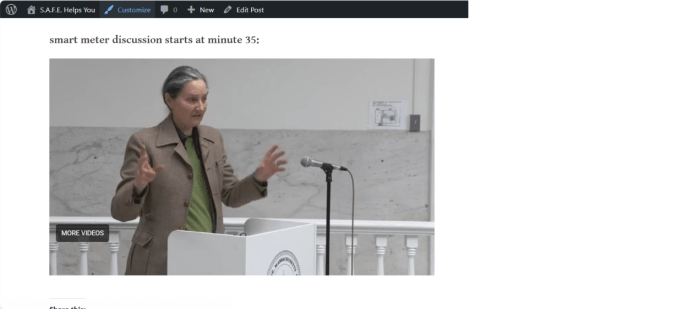
smart meter discussion starts at minute 35:
smart meter discussion starts at minute 35:
The Defender. Children’s Health Defencs News and Views Jan. 26, 2026
U.S. Health Secretary Robert F. Kennedy Jr. told USA Today that the wireless radiation from cellphones, cell towers and other wireless infrastructure is a “major health concern.”U.S. Health Secretary Robert F. Kennedy Jr. spoke with USA Today on Jan. 16, one day after HHS launched a new study into the health effects of wireless radiation — a step that advocates say could reflect a major shift in federal policy.
January 20, 2026 • Updated January 21, 2026
Kennedy spoke with USA Today on Jan. 16, one day after the U.S. Department of Health and Human Services (HHS) launched a new study into the health effects of cellphone radiation — a step that advocates say could reflect a major shift in federal policy.
The same day HHS launched the study, the U.S. Food and Drug Administration under Kennedy’s direction scrubbed old webpages stating that cellphones aren’t dangerous.
Kennedy said he was “very concerned” about the negative health impacts of electromagnetic radiation (EMR), a term that encompasses both radiofrequency (RF) radiation and electromagnetic fields (EMFs).
According to Kennedy, there are “literally over 10,000 studies” on EMR documenting “ill effects, including cancer tumor growth.”
read more: RFK Jr. Tells USA Today: Wireless Radiation Is ‘Major Health Concern’ • Children’s Health Defense
FROM
| Patricia BurkeJan 22 · Patricia’s Substack for Safe Tech International |
Modern electric vehicles make this shift impossible to ignore. These cars are high voltage electrical systems on wheels. Massive lithium ion batteries run beneath the cabin floor. Power electronics cycle continuously. Antennas handle cellular data, Bluetooth, WiFi, GPS, and telemetry at all times. Large touchscreens glow inches from the driver and passengers. All of this takes place inside a metal shell that traps electromagnetic activity close to the body. People sit in these environments for hours, often daily, without thinking about what prolonged exposure might mean for a biological system built on electrical signaling.
The effects are becoming increasingly visible. Adults report strange rashes that do not behave like ordinary skin conditions. Persistent brain fog that feels physical rather than psychological. Fatigue that never fully resolves. Head pressure. Sleep disruption. Heart rhythm abnormalities. Neurological symptoms that never land neatly in a diagnostic box. Some develop serious illnesses that are written off as unlucky coincidences. These complaints are not scattered randomly across time. They cluster in the same decade, alongside the same environmental changes
ENVIRONMENTAL HEALTH TRUST, ET AL. PETITIONERS V. FCC AND UNITED STATES OF AMERICA, RESPONDENTS
“For the reasons given above, we grant the petitions in part and remand to the Commission to provide a reasoned explanation for its determination that its guidelines adequately protect against harmful effects of exposure to radiofrequency radiation unrelated to cancer.
It must, in particular,
To be clear, we take no position in the scientific debate regarding the health and environmental effects of RF radiation — we merely conclude that
the Commission’s cursory analysis of material record evidence was insufficient as a matter of law. As the dissenting opinion indicates, there may be good reasons why the various studies in the record, only some of which we have cited here, do not warrant changes to the Commission’s guidelines. But we cannot supply reasoning in the agency’s stead, see SEC v. Chenery Corp., 318 U.S. 80, 87–88 (1943), and here the Commission has failed to provide any reasoning to which we may defer.
So ordered.”
November 5, 2025 Read more by clicking this link: Pennsylvania Woman Scores Temporary Win Against Smart Meter Mandate • Children’s Health Defense
A Pennsylvania woman won a temporary ruling allowing her to keep her mechanical meter and requiring her electric company to maintain her power while her lawsuit against the state’s smart meter mandate proceeds.
Madison Rose Lucey, a 23-year-old who has a physical disability aggravated by wireless radiation from smart meters, accused the Pennsylvania Public Utility Commission (PAPUC) and FirstEnergy of discriminating against her by refusing her request to keep a mechanical meter as a disability accommodation.
According to her amended complaint, filed Nov. 3 in the U.S. District Court for the Middle District of Pennsylvania, PAPUC and FirstEnergy rejected her request despite a letter from her doctor stating that she needed to avoid exposure to wireless radiation. Lucey filed her original complaint in September.
October 29, 2025 Presented by Cece Doucette, Director, Massachusetts for Safe Technology, Safer Screentime; With Gratitude to Co-Host Ken Gartner, EMR-S, Bio-Safer Housing
Thank you to everyone who joined me (Cece Doucette) and our wonderful co-host, Building Biologist Ken Gartner, for this timely webinar! – Cece Doucette LINK: https://www.youtube.com/watch?v=k2FyRZ5eQz4
Extremely informative highlights:
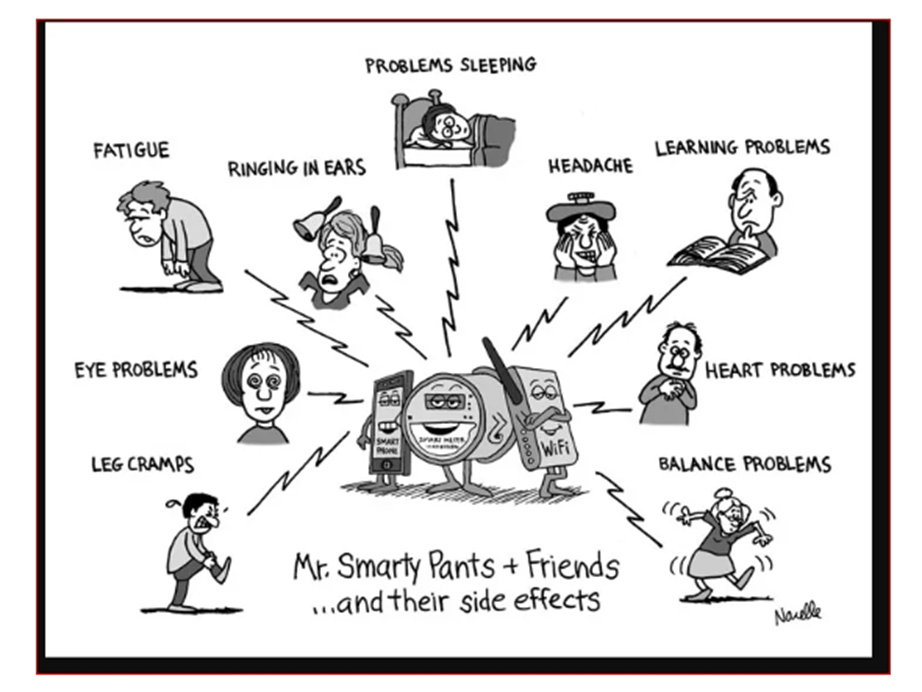
Electromagnetic Radiation Syndrome, EMR-Syndrome (ADA) symptoms
➢ Insomnia ➢Headaches ➢Nosebleeds/earbleeds ➢Fatigue ➢Pain
➢Skin abnormalities ➢ Irregular heartbeats ➢Cognitive impairment
➢Anger, behavior issues ➢Anxiety, depression, suicidal ideation
Top 20 Symptoms Reported from Smart Meters
Potentially caused by:
Internet of Things (IoT) appliances Smart phones and Bluetooth technologies
Wi-Fi routers, 3G (UMTS), 4G (LTE) and 5G Cordless phones and headsets
Tablets, laptops and printers Mice and keyboards Gaming devices, virtual reality
Baby monitors “Smart” hearing aid
How to mitigate dangerous EMF from wifi devices:

Community Level Electropollution
Macro cell towers 5G small cells Satellites Wireless access points Utility smart meters
Utility “Smart” Meters Hazards Explained:
>Some pulse radiation continuously
>Can hop on house wires/pipes
>Fires, explosions, improper grounding
>Data harvesting, privacy issues
>Leading cause of sudden onset
>EMR Syndrome
>Environmental justice/Worcester
>TedX Talk
>Jeromy Johnson, engineer
>TedX Talk: Dr. Alexia McKnigh
What Can We Do?
➢ Do nothing, keep vigilant for signs/symptoms.
➢ Do not use bedroom adjacent to broadcasting meters (consider bed canopy)
➢ Ask Utility whether a safer ‘opt-out’ meter is available, aim for not radiating
➢ Ask Utility whether they can relocate any broadcast antenna
➢ Ask Utility if you can upload a monthly photo of reading
➢ Surround/redirect/shield antennas to protect living space
➢ Consider weaning from natural gas use, thus no gas meter
➢ Consider drilling a well, thus no water meter
➢ Move electric meter to pedestal in the yard (facing away)
➢ Reduce ‘dirty electricity’ exposure from main electrical service (gas and water
meters don’t connect to house’s wiring) UNFORTUNATELY – For Apartment Dwellers, there are fewer options, bank of meters
➢ Public engage
| Public Name: Kathy Carlisle October 2025 |
| I have followed the fight against the Verizon Tower in Pittsfield from the beginning and find it unconscionable that five years later families are still forced to live as refugees in their own community in order to survive. As a renter, I was a lucky one able to leave a big city after the electro-smog made me desperately ill. Yes, Amelia. You are so right!! Privilege is when you think something is not a problem because it is not a problem to you personally. May the court rule to protect all citizens from harm. Kathy Carlisle, Sandgate, VT |
SATURDAY, APRIL 12TH Noon to 2PM Random Harvest 1785 State Route 23, Craryville, NY
Would you put your head in a microwave oven?? YET, would you wear ear buds? Did you know they operate on the same frequency! What about 5G showering down on us? Come hear expert educator, Cecelia Doucette, from Massachusetts for Safe Technology to learn what type/level of wireless radiation is safe and how to protect our town and our home. Cecelia Doucette, MTPW, BA Technology Safety Educator Director of Massachusetts for Safe Technology
Currently 5G is being installed in Columbia County, and wireless is in our schools, all while THERE IS A PLETHORA OF RESEARCH DATA documenting ill-effects on virtually ALL ANIMAL SPECIES which list long-term microwave radiation as the cause!
Smart meters, cell towers, mobile phones, 5G all emit low-level microwave radiation with added “pulses”. THEY CAUSE CELLULAR DISTRESS.
Yet our safety guidelines only address the short term heating effects from wireless radiation. THERE ARE NO SAFETY STANDARDS which address the biological aspects of the pulsed radiation.
AND WE ARE ALLOWING MORE OF THIS TYPE OF RADIATION IN OUR TOWNS, HOMES, SCHOOLS!
COME to Random Harvest on Saturday April 12th from noon to 2PM to learn from a woman who has tirelessly educated legislators, moms, school districts, communities, doctors, teachers on the issues and helped our nation with solutions.
It is a pleasure to have her with us for a day! Please come to meet Cece Doucette in Craryville to speak on “WHAT TRULY IS RADIO-FREQUENCY RADIATION?

Venue: Random Harvest Address: 1785 State Route 23, Craryville, NY Phone: 518-325-1565
Email: klrepresents@gmail.com
CELLPHONES: Scientists observe that smartphone restriction for three days can alter brain activity The researchers recruited young adults for a 72-hour smartphone restriction diet where they were asked to limit smartphone use to essential tasks such as work, daily activities, and communication with their family or significant others. During these three days, the researchers conducted psychological tests and did brain scans using functional magnetic resonance imaging (fMRI) to examine the effects of restricting phone usage. Brain scans showed significant activity shifts in reward and craving regions of the brain, resembling patterns seen in substance or alcohol addiction. There is an ongoing debate about the term “smartphone addiction” (SPA) making an appearance in many psychological tests, as experts believe that this term might create an inaccurate image of the complex emotional, mental and social aspects associated with smartphone overuse. Nevertheless, neuroscience has seen a growing focus on excessive smartphone use (ESU) due to its association with negative physical and mental health effects, and its links to addictive behaviors. []After the three-day restriction period, participants underwent fMRI scans while being shown different sets of images: neutral scenes (such as landscapes and boats), smartphones turned on, and smartphones turned off. The scans revealed that limiting smartphones led to brain activity changes in areas associated with dopamine and serotonin—neurotransmitters that regulate mood, emotions and also addiction. The researchers noted that smartphone restriction can resemble withdrawal from addictive substances or even food cravings in some ways, which was noticeable in both heavy (ESU) and regular smartphone (non-ESU) participants. As technology advances, recognizing how our smartphone usage habits affect our brains is crucial for building healthier digital routines. More information: Mike M. Schmitgen et al, Effects of smartphone restriction on cue-related neural activity, Computers in Human Behavior (2025). DOI: 10.1016/j.chb.2025.108610
HEALTH: Infected Ixodes ricinus ticks are attracted by electromagnetic radiation of 900 MHz Ticks and Tick-borne Diseases Abstract The electromagnetic field (EMF) is known to influence functions of the nervous, cardiovascular and reproductive systems of many animals, including ticks. The aim of this study was to test the behavior of ticks in the presence of radio-frequency EMF. For testing, 160 adult male and 140 adult female unfed Ixodes ricinus ticks were used. Individuals were exposed to 900 MHz EMF in the Radiation–Shielded Tube (RST). Ticks were attracted to the irradiated area. This effect was significantly stronger for ticks infected with Rickettsia spp., suggesting that pathogens can alter the ticks’ response to environmental stimuli. These results lead to the question of whether man-made EMF may have an impact on I. ricinus activity and, as such, be a contributing factor to the ongoing changes in the distribution of the tick and its pathogens currently observed in Europe and elsewhere. Conclusions In conclusion, we showed in experimental conditions that I. ricinus ticks sense EMF from artificial sources and that they express affinity toward the irradiated area. Interestingly, this effect was significantly stronger for ticks infected with Rickettsia spp., suggesting that these pathogens can alter tick host response to EMF. It is thus possible than man-made EMF can have an impact on I. ricinus questing activity and that it could be partly responsible for the dynamic changes in the activity. -Courtesy Dr. Amy
Bills introduced since Jan. 2025
COPY AND PASTE THIS:
Note to elected officials: Add comment: “Please vote against these bills. They proliferate the EMF hazards to the environment and biology.”
HR 339 Introduced by Rep. Crenshaw (TX) to add wireless antennas on any structure (includes buildings, schools, cell towers) without consent of tenants, teachers or parents
HR 279 Introduced by Rep. Griffith (VA) expands federal preemption over local government without consent by adding antennas to supposedly “improve” service
HR 471 Introduced by Rep. Westerman (AR) Pilot program to use 5G to detect wildfires without regard to cell towers already having caused devastating wildfire
HR 8467 – Farm Bill – streamline wireless deployment and eliminate environmental review for a large swath of towers
HR 6492 – Federal lands omnibus bill, incorporates S 2018 to carpet 5G towers in forests, a serious fire risk – AMEND in Senate
go to: Send to MA senators.. go to the url copy and paste the above message into the share your opinion.
https://www.markey.senate.gov/contact
https://www.warren.senate.gov/contact/shareyouropinion
email direct: Paul.Mark@masenate.gov
2. Science
3. Medicine
4. MA EMF Bills:
LAUSD phone free this week; letter to address EMFs
| Legislator | Link | Title |
| Senator John Velis | Bill SD.1482 | An Act to protect children’s learning, focus and emotional health during school hours |
| Rep. Alice Peisch | Bill HD.3070 | An Act promoting Safe Technology Use and Distriction-Free Education for Youth |
| Sen. Julian Cyr | Bill SD.654 | An Act promoting Safe Technology Use and Distriction-Free Education for Youth |
| David DeCoste | Bill HD.1437 | An Act to Regulate the Use of Mobile Communication Devices in Educational Institutions |
| Sen Crighton | Bill SD.1653 | An Act providing for Phone Free Schools |
| Rep. Jeffrey Turco | Bill HD.2819 | An Act prohibiting cell phone usage during the school day |
| Sen. John Keenan | Bill SD.868 | An Act limiting cell phones in classrooms |
| Rep. Josh Tarsky | Bill HD.442 | An Act relative to phone-free schools |
| Sen. John Cronin | Bill SD.2496 | An Act to promote phone free schools |
| Rep. Adam Scanlon | Bill HD.3823 | An Act establishing a commission regarding phones in schools |
5. Federal
6. Legal Actions:
7. Local Actions & Resources
8. Media Activity
9. Events:
10. Tech Tips
11. Other/Q&A
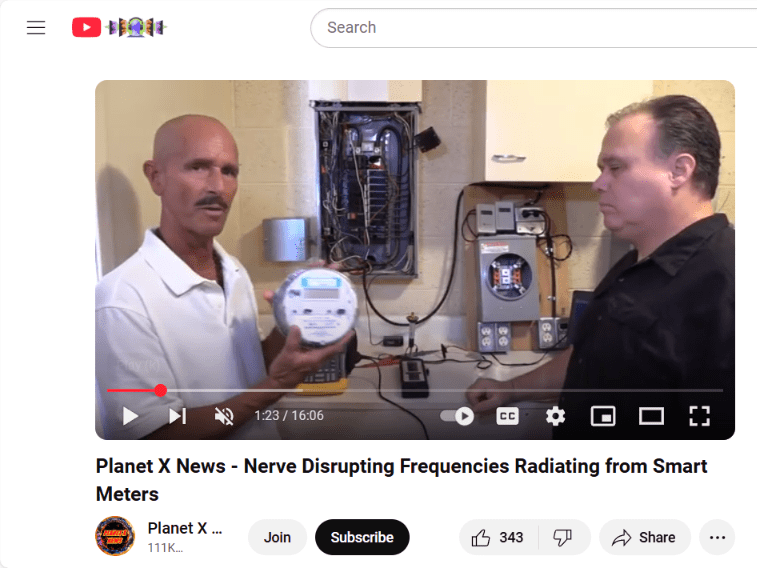
Planet X News – Nerve Disrupting Frequencies Radiating from Smart Meters
This is a great video with electrical experts weighing in on the hazards of smart meters. Once you watch it you will be inspired to call your power company and have them replaced.
William Bathgate, EE, ME
Evaluation of the ITRON Open Way AMI Meter
Here’s the file “Bathgate on Smart Meters.pdf” for your review.
https://acrobat.adobe.com/id/urn:aaid:sc:VA6C2:6813f12e-d9de-4421-a5b9-10387ac966ea
THE ELECTRONIC SMART METERS WILL NEVER PASS AN OVERVOLTAGE TEST!
The spec sheets for smart meters only list UL2735…but they do NOT say UL2735 approved. And when you ask the Utility for their test results, they have nothing to show.
Please look at page 21 below of the UL2735 code itself, it shows that the “Extended Overvoltage Tests” are deleted! ..because they will fail!
ELECTRIC UTILITY METERS – UL 2735
7 Extended Overvoltage Test
17.1 Deleted January 9, 2014
17.2 Deleted January 9, 2014
17.3 Deleted January 9, 2014
17.4 Deleted January 9, 2014
17.5 Deleted January 9, 2014
17.6 Deleted January 9, 2014
17.7 Deleted January 9, 2014
17.8 Deleted January 9, 2014
Lamech F.: Self-Reporting of Symptom Development From Exposure to Radiofrequency Fields of Wireless Smart Meters in Victoria, Australia: A Case Series, Altern Ther Health Med. 2014 Nov-Dec;20(6):28-39. http://www.ncbi.nlm.nih.gov/pubmed/25478801 – The study examines 92 residents who reported symptoms to a website, and analyzes and discusses them. It finds that the symptoms most frequently reported to occur after the installation of smart meters were insomnia, headache, tinnitus, fatigue, cognitive impairment, dysesthesia, and brain fog.
THE COMMONWEALTH OF MASSACHUSETTS
OFFICE OF THE ATTORNEY GENERAL CENTRAL MASSACHUSETTS DIVISION 10 MECHANIC STREET, SUITE 01 WORCESTER, MA 01608
November 8, 2023
(508) 792-7600 (508) 795-1991 fax www.mass.gov/ago
Jennifer L. Messina, Town Clerk Town of Great Barrington 334 Main Street Great Barrington, MA 01230
Re: Great Barrington Annual Town Meeting of May 1, 2023 – Case# 10937 Warrant Articles# 30, 31, 32, 33, 34, 35, 36, and 38 (Zoning)
Warrant Articles# 24, 29, and 39 (General) 1
Dear Ms. Messina:
Article 38 – Under Article 38, a citizen’s petition article, the Town voted to add to the Town’s “Wireless Telecommunications Overlay District” a new Section 9.3.16.5 that declares all wireless telecommunications facilities (WTF) applications to be incomplete until the FCC completes an environmental review of existing WTF and updates its regulations based on the result of its review. As explained in more detail below, we disapprove Article 38 because it is a prohibition on wireless communications facilities in violation of the federal Telecommunications Act of 1996, 47 U.S.C. § 332 (c) (7) (TCA). See Town of Amherst, N.H. v. Omnipoint Communications Enters, Inc., 173 F.3d 9, 16 (1st Cir. 1999) (state and local laws are preempted, under the Supremacy Clause of the Federal Constitution if they are read and applied so as effectively to preclude personal wireless service).
We emphasize that our decision in no way implies any agreement or disagreement with the policy views that may have led to the passage of the by-law amendments. The Attorney General’s limited standard of review requires her to approve or disapprove by-laws based solely on their consistency with state law, not on any policy views she may have on the subject matter or wisdom of the by-law. Id. at 795-96, 798-99. During our review of Article 38, we received correspondence urging us to approve the by-law asserting that it protects the public from health and safety issues associated with WTF. We appreciate these communications as they have aided our review. However, we must disapprove Article 38 for the reasons explained below.
1 In a decision issued to the Town on August 1, 2023, we approved Articles 29, 30, 31, 32, 33, 34, 35, and 39; took no action on Article 24 because it was not a by-law amendment, and by agreement with Town Counsel under G.L. c. 40, § 32, we extended our deadline for a decision on Article 38 for an additional ninety days until November 8, 2023.
In this decision we describe the by-law amendments; discuss the Attorney General’s limited standard ofreview of town by-laws under G.L. c. 40, § 32; and then explain why, governed as we are by that standard, we disapprove Article 38.
I. Summary of Article 38
Under Article 38 the Town amended Section 9.3.16 to add a new paragraph 5 that deems all WTF applications incomplete until the FCC completes its review of WTF and updates its regulations to include measures that comply with the results of the FCC’s review as follows:
WTF applications, will be considered incomplete until the FCC completes the DC Circuit Court- mandated Environmental Review of the entire 800,000 to I million WTF roll out to the conditions as stated in the NEPA policy Act 1691 I including studies from scientists independent from industry, who have fully investigated millimeter wave 5G small cell technology safety; and that the FCC regulations have been updated to include measures that comply with the results of this review; and, that the Town of Great Barrington shall consider reasonable alternatives such as fiber optic.
1 The FCC is required by the National Environmental Policy Act of 1969, among other things, to evaluate the effect of emissions from FCC-regulated transmitters on the quality of the human environment. On August 9, 2019, the D.C. Circuit Court of Appeals, in its Ruling in Case 18-1129, vacated FCC Order l 8-30’s deregulation of small-cell Wireless Transmission Facilities(s) [sWTFs} and remanded this to the FCC. In Case 18-1 129, the judges stated that “the FCC failed to justify its determination that it is not in the public interest to require review of [sWTF] deployments” and ruled that “the Order’s deregulation of [sWTFs] is arbitrary and capricious.” The FCC was mandated to do this review in two court rulings which are submitted into the record: one in 2019 in Case 18-1129, Keetoowah et al. v FCC; and another in 2021 in Case 20-1025, EHT/CHD v. FCC. To date the FCC has not complied.
https://scientists4wiredtech.com/2019/08/federal-court-overturns-fee-overturns- fee-order- bypassingenvironmental-r https://www.fee.govIdocument/dc circuit-decision-environmental-helath- trust-v-fec
Definition: Wireless Telecommunications Facilities means the plant, equipment and property including, but not limited to, cables, wires, conduits, ducts, pedestals, electronics, and other appurtenances used or to be used to transmit, receive, distribute, provide or offer wireless telecommunications service. October I, 2019, the D.C. Circuit Court of Appeals in Case No, 18-1051, Mozilla et al. v. FCC, confirmed internet “Services” to be reclassified by the FCC as Title I, unregulated “Information Services”. At present, only wireline and wireless telephone and text transmissions are classified as Title II, regulated “Telecommunications Services”. Title I and Title II applications, therefor, need to be regulated differentially by local planning boards and commissions. Every new [wireless telecommunications
facility (“WTF”)] must undergo NEPA review, and that WTF applications cannot be batched for such purpose.
Our review of Article 38 is governed by G.L. c. 40, § 32. Under G.L. c. 40, § 32, the Attorney General has a “limited power of disapproval,” and “[i]t is fundamental that every presumption is to be made in favor of the validity of municipal by-laws.” Amherst, 398 Mass. at 795-96. The Attorney General does not review the policy arguments for or against the enactment. Id. at 798-99 (“Neither we nor the Attorney General may comment on the wisdom of the town’s by-law.”) “As a general proposition the cases dealing with the repugnancy or inconsistency of local regulations with State statutes have given considerable latitude to municipalities, requiring a sharp conflict between the local and State provisions before the local regulation has been held invalid.” Bloom v. Worcester, 363 Mass. 136, 154 (1973).”
Article 38, as an amendment to the Town’s zoning by-laws, must be accorded deference.
W.R. Grace & Co. v. Cambridge City Council, 56 Mass. App. Ct. 559, 566 (2002) (“With respect to the exercise of their powers under the Zoning Act, we accord municipalities deference as to their legislative choices and their exercise of discretion regarding zoning orders.”). When reviewing zoning by-laws for consistency with the Constitution or laws of the Commonwealth, the Attorney General’s standard of review is equivalent to that of a court. “[T]he proper focus of review of a zoning enactment is whether it violates State law or constitutional provisions, is arbitrary or unreasonable, or is substantially unrelated to the public health, safety or general welfare.” Durand v. IDC Bellingham, LLC, 440 Mass. 45, 57 (2003). However, a municipality has no power to adopt a zoning by-law that is “inconsistent with the constitution or laws enacted by the [Legislature].” Home Rule Amendment, Mass. Const. amend. art. 2, § 6.
The federal Telecommunications Act of 1996, 47 U.S.C. § 332 (c) (7) (TCA) preserves state and municipal zoning authority to regulate personal wireless service facilities. However, the TCA imposes limitations on that authority as follows:
While the TCA does not define what constitutes a “prohibition” or an “effective prohibition” of WTF, the Federal courts have construed the limitations listed under 47 U.S.C. § 332 (c) (7) as follows. First, even a facially neutral by-law may have the effect of prohibiting the provision of wireless coverage if its application suggests that no service provider is likely to obtain approval. “If the criteria or their administration effectively preclude towers no matter what the carrier does, they may amount to a ban ‘in effect’….”Town of Amherst, N.H. v. Omnipoint Communications Enters, Inc., 173 F.3d 9, 14 (1st Cir. 1999).
Second, local zoning decisions and by-laws that prevent the closing of significant gaps in wireless coverage have been found to effectively prohibit the provision of personal wireless services in violation of 47 U.S.C. § 332(7). See, e.g., Nat’l Tower, LLC v. Plainville Zoning Bd. of Appeals, 297 F.3d 14, 20 (1st Cir. 2002) (“local zoning decisions and ordinances that prevent the closing of significant gaps in the availability of wireless services violate the statute”); Omnipoint Communications MB Operations, LLC v. Town of Lincoln, 107 F. Supp. 2d 108, 117 (D. Mass. 2000) (by-law resulting in significant gaps in coverage within town had effect of prohibiting wireless services).
Third, whether the denial of a permit has the effect of prohibiting the provision of personal wireless services depends in part upon the availability of reasonable alternatives. See 360 Degrees Communications Co. v. Bd. of Supervisors, 211 F.3d 79, 85 (4th Cir. 2000). Zoning regulations must allow cellular towers to exist somewhere. Towns may not effectively ban towers throughout the municipality, even under the application of objective criteria. See Virginia Metronet, Inc. v. Bd. of Supervisors, 984 F. Supp. 966,971 (E.D. Va. 1998).
In addition, 47 U.S.C. § 253, “Removals of Barriers to Entry” provides that “[n]o State or local statute or regulation, or other State or local legal requirement, may prohibit or have the effect of prohibiting the ability of any entity to provide any interstate or intrastate telecommunications service.” Section 253 (a); see ExteNet Systems, Inc. v. City of Cambridge, Ma, 481 F.Supp 3d 41, 58 (D. Mass. 2020) (“Because the [city’s] Small Call Wireless Policy is not an outright ban on the provision of personal wireless service, the validity of the Policy hinges on ‘whether the [Policy] effectively prohibits the provision of wireless services”‘).
Further, Section 6409 of the Middle-Class Tax Relief and Job Creation Act of 2012 requires that “[A] state or local government may not deny, and shall approve, any eligible facilities request for a modification of an existing wireless tower or base station that does not substantially change the physical dimensions of such tower or base station.” (emphasis added). The Act defines “eligible facilities request” as any request for modification of an existing wireless tower or base station that involves: (1) collocation of new transmission equipment; (2) removal of transmission equipment; or (3) replacement of transmission equipment. The Act applies “[n]otwithstanding
section 704 of the Telecommunications Act of 1996.” The Act’s requirement that a local government “may not deny, and shall approve, any eligible facilities request” means that a request for modification to an existing facility that does not substantially change the physical dimensions of the tower or base station must be approved.
In addition, on September 26, 2018, the FCC adopted FCC 18-133 (“Ruling and Order”), regarding the authority of municipalities to regulate small wireless facilities. Among other things, the Ruling and Order: (1) clarifies when a local requirement constitutes an effective prohibition on small wireless facilities; [Section III.A]; (2) establishes the standards and limits for fees and charges applicable to small wireless facilities; [Section 111.B]; and (3) establishes the timeframes within which a municipality must act upon small wireless facility provider’s applications [Section IV.A].
In City of Portland et al vs. United States of America, 969 F. 3d 1020 (9th Cir. 2020), the court upheld most of the FCC’s Ruling and Order. The court upheld the FCC’s fee limitations, the time periods in which local governments must act on applications, and the FCC’s authority under the Telecommunications Acts of 1996 to remove barriers that would have prevented a wireless service provider from accessing existing utility poles. Id. at 1039, 1043-1046. In addition, the court upheld the requirement that aesthetic regulations be reasonable but overturned the FCC’s requirements that aesthetic regulations be objective and no more burdensome than those applied to other types of infrastructure. Id. at 1042-1043.
The new Section 9.3.16.5 deems an application incomplete until the FCC engages in a review of WTF and amends its regulations based on the information obtained during its review. Because all applications for a WTF in Great Barrington are deemed “incomplete” until the FCC conducts this review, the permit granting authority cannot issue a permit for a WTF in the Town. Put simply, an applicant could fully comply with the Town’s by-laws but will still be denied a permit because the FCC has not reviewed WTFs and amended its regulations. Section 9.3.16.5 thus establishes a condition that no WTF applicant can satisfy. This condition results in a prohibition on WTF in violation of the TCA. See Town of Amherst, N.H. v. Omnipoint Communications Enterprises, Inc., 173 F.3d 9, 14 (1st Cir. 1999) (where town’s criteria for granting WTF permit effectively precludes WTF no matter what applicant does there is an effective ban on WTF in violation ofTCA); National Tower, LLC, v. Plainville Zoning Bd. of Appeals, 297 F.3d 14, 23 (1st Cir 2002) (“Setting out criteria under the zoning law that no one could ever meet is an example of an effective prohibition… The Telecommunications Act preempts such by-law strictures.”). For this reason, the new Section 9.3.16.5 runs afoul of the TCA’s provisions against local laws that prohibit WTF, and we disapprove it. 2
2 The petitioners cite to two case to attempt to support the legality of Article 38: United Keetowah Band of Cherokee Indians in Oklahoma v. Federal Communications Commission, 933 F.3d 728 (D.C. Cir. 2019) and Environmental Health Trust, et al. v. Federal Communications Commission, 9 F.4th 893 (D.C. Cir. 2021). However, the petitioners misconstrue these cases because neither case authorizes a town to withhold or deny a WTF while the FCC engages in a study and updates its regulations based on a future study.
IV. Conclusion
Because Article 38 results in a complete prohibition of WTF in the Town, it conflicts with the TCA and must be disapproved.
Note: Pursuant to G.L. c. 40, § 32, neither general nor zoning by-laws take effect unless the Town has first satisfied the posting/publishing requirements of that statute. Once this statutory duty is fulfilled, (1) general by-laws and amendments take effect on the date these posting and publishing requirements are satisfied unless a later effective date is prescribed in the by-law, and (2) zoning by-laws and amendments are deemed to have taken effect from the date they were approved by the Town Meeting, unless a later effective date is prescribed in the by-law.
Very truly yours,
ANDREA JOY CAMPBELL ATTORNEY GENERAL
By: Kelli E. Gunagan Assistant Attorney General Municipal Law Unit
10 Mechanic Street, Suite 301 Worcester, MA 01608 (508) 792-7600
cc: Town Counsel David J. Doneski
AG reply to Sheffield/Gt. Barrington 5G bylaw
 S.A.F.E. Helps You